
Taking the Self Seriously.
Part 2 of 3 of our series on the Civic Art of Parenting


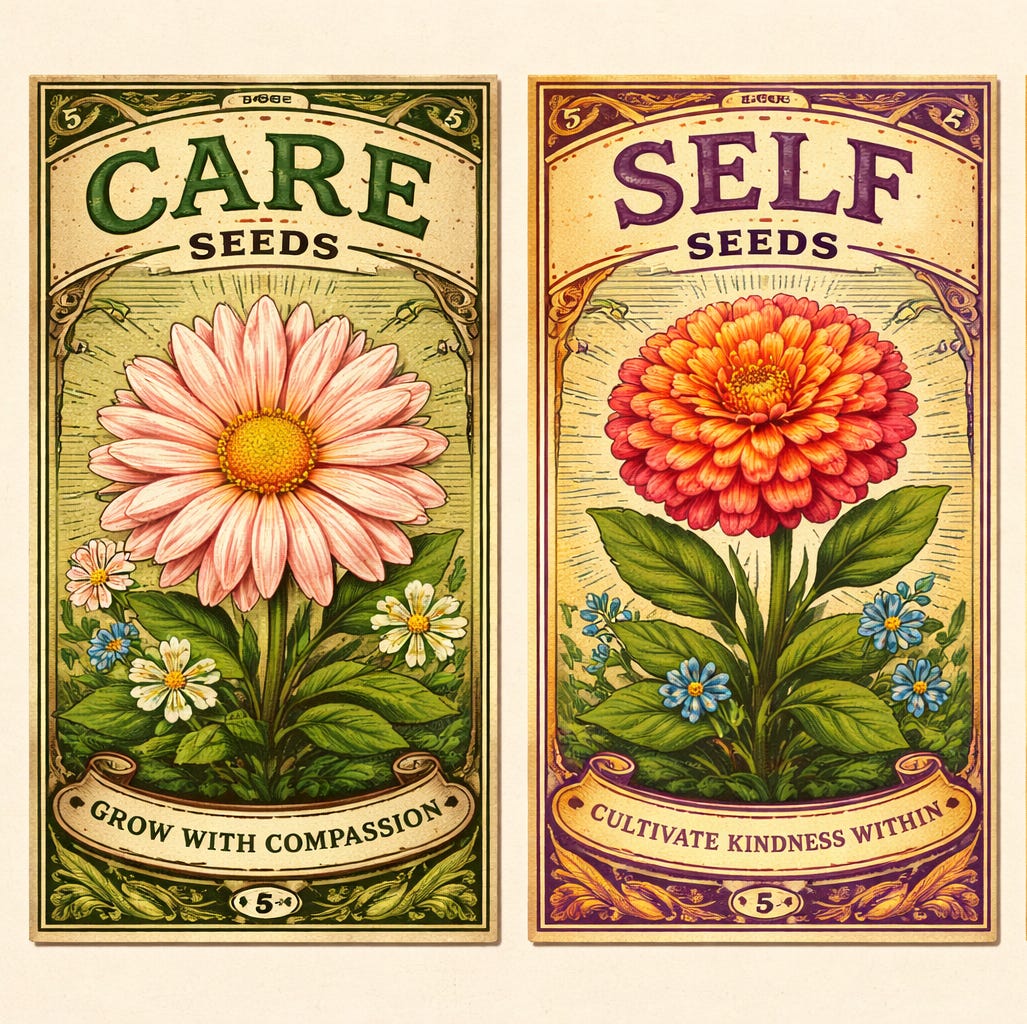
Learning to Ignore Ourselves
Helen Roy said something about intuition in her episode of WE MADE THIS POLITICAL that stuck with us. Specifically, about how women are trained to ignore their inner voice. To defer. To discount. To make sure everyone else is comfortable before attending to what their own judgment is telling them. She got emotional talking about it, and we both understood why.
For too many women, formative years are a masterclass of learning to silence their intuition.
But we think this is actually a universal problem. We are raising, and have raised, a generation of people who don’t trust themselves. And that has consequences well beyond how individuals navigate the world.
Outsourcing Judgment
As a political scientist, Lauren sees this pattern constantly in the classroom. Students want to know what the law says, what the Supreme Court says, what the expert consensus is. Not so they can evaluate those things, but so they can stop thinking. So they know the answer. And we understand the appeal: it’s exhausting to live in constant uncertainty.
But the capacity to evaluate authority—to ask whether the law is just, whether the court got it right, whether the expert is operating in good faith—is essential for self-governance. Otherwise we just have to take elected officials’, judges’, and other authorities’ word for it that their decisions are right and good. That’s like asking the barber if you need a haircut. The answer will always be yes.
When Peter Gray joined the podcast, he talked about the importance of curiosity and self-direction for children’s development. When children are treated as passive recipients of information rather than active agents in the learning process, they disengage. Instead of learning to rely on their own judgment, navigate problems themselves, and sit with discomfort, kids are trained that teachers and parents are the experts. Those kids become adults who look to authorities for answers. And that’s what our educational system has created, to a large extent.
Borrowed Agency
The connection to our current political situation is hard to ignore. One of Trump’s most powerful appeals—worth understanding rather than simply condemning—is that he seems deeply agentic. He doesn’t apologize. He doesn’t defer. He trusts his own judgment even when no one else does. For people who have been told their whole lives to discount their own perceptions, to listen to the expert, to check with an authority first, there’s something almost intoxicating about aligning with someone who just doesn’t do that. And his agency can feel like it is reflected onto his supporters. Putting on a Trump hat or t-shirt is a way to say, I, too have influence.
The problem, of course, is that basking in the reflected agency of another person is not the same thing as the genuine article. Real agency requires having the ability to act on the world around you and the wisdom to do so according to your values. It means knowing yourself well enough to distinguish your actual values from your initial reaction, your considered judgments from your defensive ones. It requires sitting with the uncomfortable question of why you believe what you believe and whether it holds up to scrutiny. It requires aligning your actions with your principles.
Civic Solitude
Robert Talisse’s work on civic solitude is useful here. His argument, roughly, is that genuine democratic participation requires time away from the noise, not because solitude is inherently valuable, but because you can’t figure out what you think when you’re constantly processing what everyone else thinks. The 24-hour news cycle, the algorithmic feed, the smartphone in every pocket, these are structures that make civic solitude nearly impossible. There’s always another opinion available, always another expert to defer to, always another authority to check.
Lauren and Lura both make a point of taking walks without podcasts. It sounds trivial. It isn’t. The point is to give your brain space to notice, to consider, to wander. The difference is meaningful. We’ve both noticed how that kind of quiet is restorative and also constructive, allowing for creative leaps that aren’t possible when we’re always looking outside ourselves.
And maybe it’s worth considering that the real reason some people become active participants in drowning out their own intuition is because it has things to say that they would rather not hear.
When we talk about taking the self seriously, we aren’t advocating selfishness or narcissism. We don’t mean ignoring expertise or other people’s input. We mean the capability to balance those inputs with your own insight and experience.
Cultivating Self-Knowledge
Self-knowledge is the basic precondition for genuine participation in your own life. Aristotle called it eudaimonia: the kind of flourishing that comes from actually developing and exercising your capacities, figuring out what you’re good at and what you value, and building something that fits who you are. You can’t get there by constantly looking outside yourself for the answer.
Developing self-awareness, attending to the self, cultivating intuition—these are all skills that require deliberate cultivation over time, whether in ourselves or in our children. It takes discipline to acquire intuition and self-awareness without being being self-indulgent or narcissistic.
But right now we are not doing a good job of building these skills. And the costs are showing up everywhere, from individual mental health to civic engagement.
So what do we do? Journaling, mindfulness practices, even personality tests are ways to learn more about who you are and what’s important to you. For some of us, we also have to undo the effects of learning to silence the self in our early years. But if we want to help future generations cultivate self-knowledge, it starts with doing so in ourselves.
I think there is a myth that men aren't doing the same thing, "Specifically, about how women are trained to ignore their inner voice. To defer. To discount. To make sure everyone else is comfortable before attending to what their own judgment is telling them." Men are just rewarded more from the system for ignoring their inner voice. There's a need to get more inner voices in all of the rooms. I think women have a head start in exercising their inner voice. The inner voice will be more critical to help us reground ourselves in the culture of care you are describing.
I love this description of agency. "Real agency requires having the ability to act on the world around you and the wisdom to do so according to your values. It means knowing yourself well enough to distinguish your actual values from your initial reaction, your considered judgments from your defensive ones. It requires sitting with the uncomfortable question of why you believe what you believe and whether it holds up to scrutiny. It requires aligning your actions with your principles."
This has been my process as I'm learning to be more true to my own inner voice.
I find the Ignatian practice of examen to be very helpful in cultivating the sort of self-knowledge that supports aligning one’s actions with values. Looking back on the day and asking, “Where was I drawing closer to God? (Aligning with my values.) Where was I moving further from God? (Misaligned with my values) How might I do better tomorrow?” The practice of examining actions and motives, then setting intentions for aligning action and values is a gentle corrective to the drift, or the sometimes jarring swerve, away from my core understanding of what constitutes goodness. Of course, I also pray to God to help me fulfill my intentions.